
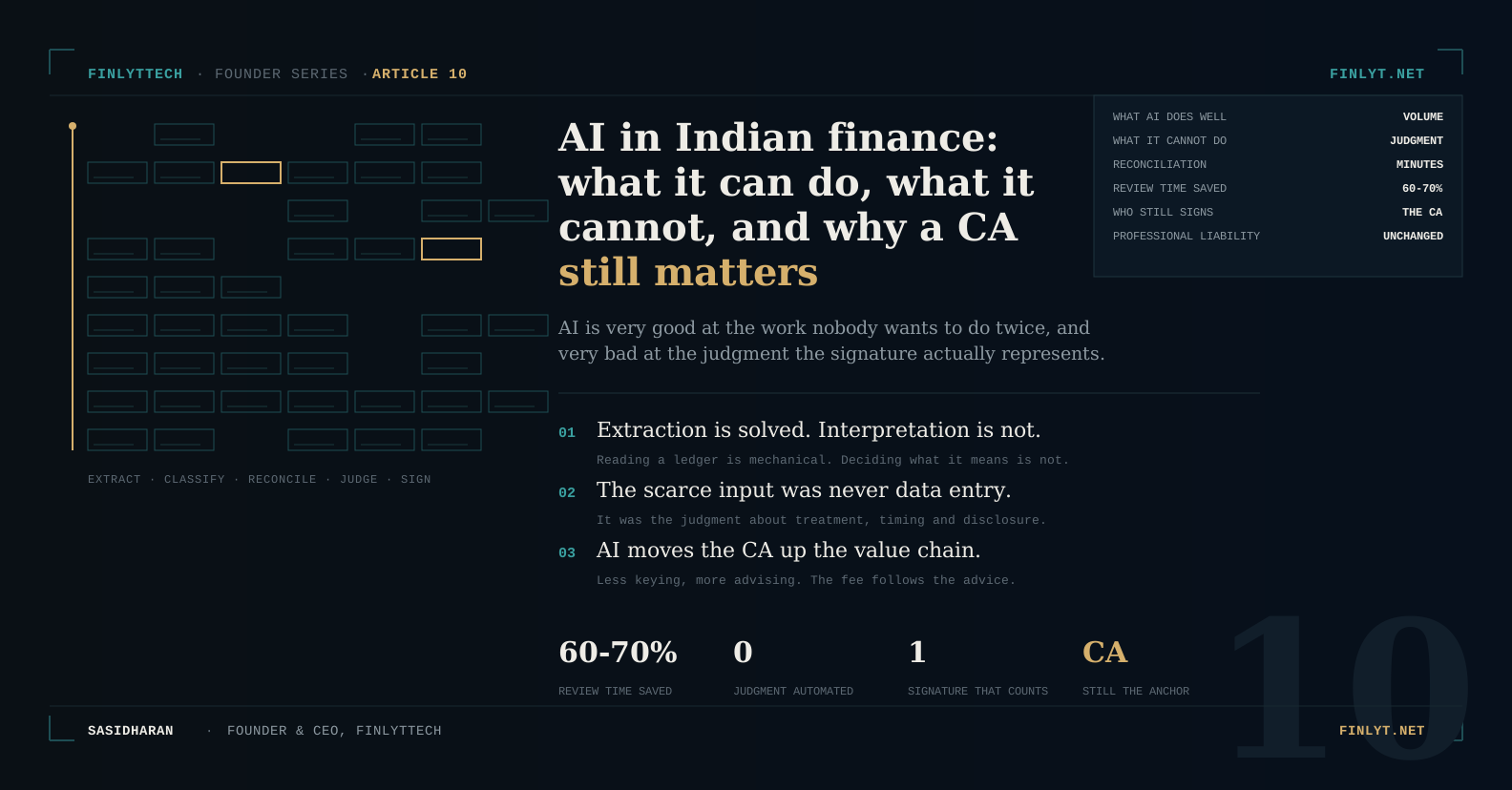
AI in Indian finance: what it can do, what it cannot, and why a CA still matters
Every few weeks someone asks me a version of the same question: with AI now able to read a balance sheet, flag an anomaly, and write a paragraph of commentary about it, what’s actually left for a CA to do?
It’s a fair question, and I don’t think the honest answer is “everything, as before” or “very little, going forward.” The honest answer is that the boundary that matters isn’t between what AI can automate and what a human must do. It’s between processing and judgment. AI has gotten very good at the first. It hasn’t come close to the second, and I don’t think it will for a long time.
What has actually arrived, versus what is hype
Strip away the noise and the real progress in Indian financial services is narrower than the conversation suggests. Large language models can now read a trial balance, a GST filing, or a bank statement and produce a structured summary in seconds. They can flag a transaction that doesn’t fit the pattern of the ninety before it. They can draft a first version of MIS commentary that used to take an analyst half a day.
What hasn’t arrived – despite plenty of marketing that implies otherwise – is anything close to a system that can sign off on a filing position, defend a tax structure to an assessing officer, or tell a founder whether a related-party transaction is going to be a problem in due diligence eighteen months from now. That gap isn’t a temporary limitation waiting on the next model release. It’s a difference in kind.
What AI genuinely does well
Pattern recognition across large volumes of transaction data. Anomaly detection – the unusual invoice, the vendor payment that breaks a historical rhythm, the debtor whose payment cycle has quietly stretched from 45 days to 70. Narrative generation, once someone has told it what the narrative should emphasise. And raw data processing at a speed no analyst, however good, can match – reconciling a year of GST filings against books in minutes rather than days.
This is genuinely useful. It removes hours of mechanical work that used to eat into the time a CA or CFO should be spending on judgment, not data entry.
What AI cannot do
It cannot exercise professional judgment about which of three technically defensible tax positions a specific client should take, given their risk appetite, their sector, and their history with the department. It cannot interpret genuine regulatory ambiguity – and Indian tax and compliance law is full of it – in a way that holds up under scrutiny. It cannot advise on complex structuring where the right answer depends on facts a model was never given and relationships a model doesn’t have. And it cannot manage the client relationship itself: the conversation where a founder needs to hear a hard truth delivered by someone they trust, not a generated paragraph.
The models that produce the most confident-sounding output are often the ones furthest from understanding what they don’t know – which is precisely the failure mode that matters most in financial advice.
From executor to interpreter
The CA’s role isn’t disappearing under this shift. It’s moving up a level. Less time on manual reconciliation, more time on interpreting what the reconciled data actually means for a specific client, in a specific sector, at a specific moment in their business. Less time producing the report, more time deciding what the report should say and standing behind it.
That’s not a downgrade. It’s closer to what the profession was always meant to be before compliance volume crowded it out.
Why the human in the loop is a feature, not a limitation
At FinLytTech, every report our system generates is built to be reviewed by a CA before it reaches a client, not to bypass one. The AI does the processing – pulling data from Tally, Zoho Books, or ERPNext, flagging what’s unusual, drafting the first pass of commentary. The judgment – what to emphasise, what to caveat, what to say directly to the client – stays with the professional. We built it that way deliberately, because we think AI-generated financial advice without expert review isn’t a shortcut. It’s a liability sitting in a founder’s inbox, waiting for the moment it turns out to be wrong.
What this means for anyone entering financial work in 2026
If you’re building a career in Indian finance right now, the mechanical skills that used to differentiate a good analyst – fast reconciliation, clean formatting, quick report turnaround – are worth less than they were five years ago, because a model can do a version of them in seconds. What’s worth more is judgment: the ability to read a number and know what question it’s actually answering, and the ability to say something a client needs to hear even when it’s uncomfortable. That was always the harder skill. It’s just become the only one that matters.
In your current financial work, where does the value actually live – in the processing, or in the judgment?
FinLytTech pairs AI-driven financial intelligence with the CA who reviews it – because the data deserves both speed and someone who’s accountable for what it means. Demo at finlyt.net.
All the best – read this and more at the FinLytTech Blog: finlyt.net/blog